

 SEO
SEO Digital PR
 GEO / AI Search
 Social

GEO Statistics 2026

Kamile Kupryte
Marketing Manager
Share
this article


The world of Search is constantly evolving, and GEO is emerging as a key factor in reshaping the industry, as it undergoes its biggest change since the rise of mobile SEO.
As the focus shifts away from the traditional ten blue links towards a broader approach that incorporates GEO, brands need to be receptive to new ideas. Research shows that AI search is becoming part of everyday search behaviour, as people increasingly find information through AI-generated answers.
Citation on AI Overviews, ChatGPT, Gemini and Perplexity is increasingly central to how people discover brands, and that presents an opportunity. The brands that are best able to integrate AI into their approach to SEO will be well positioned to improve their visibility.
So, how should your brand adapt to the new era of SEO? We’ve reviewed the findings of a variety of reports to establish exactly how the industry is changing, and how brands can position themselves for future success.
AI search is becoming mainstream
- Google AI Overviews now reach more than 2.5 billion monthly users. (Source: Google)
Google’s research underlines the importance of generative AI in modern Search. The data shows that their AI Overviews feature serves 2.5 billion users each month as of June 2026.
- Google AI Mode has surpassed one billion monthly users. (Source: Google)
The study by Google into the opportunities presented by generative AI in Search also found that more than a billion users use their opt-in Google AI Mode feature each month, demonstrating how AI has become central to search behaviour.
- ChatGPT has more than 900 million weekly active users. (Source: OpenAI)
OpenAI’s study into the growth of their ChatGPT application shows that it serves more than 900 million users every week as of February 2026. Google’s AI search data may be influenced by the brand’s existing reputation – OpenAI’s newcomer status shows the public’s active embracing of the technology.
The research carried out by Google and OpenAI shows that AI search is now at mainstream scale. Though once viewed as experimental technology, it is now firmly embedded in standard search behaviour, and adapting to this new era of search is vital for brand visibility.
Clearly, GEO is no longer about future-proofing your brand for where Search goes next, but competing for visibility in an established process that is used by billions of people across the world. Brands need to adjust their approach to SEO now – but how?
Ranking well doesn’t guarantee visibility
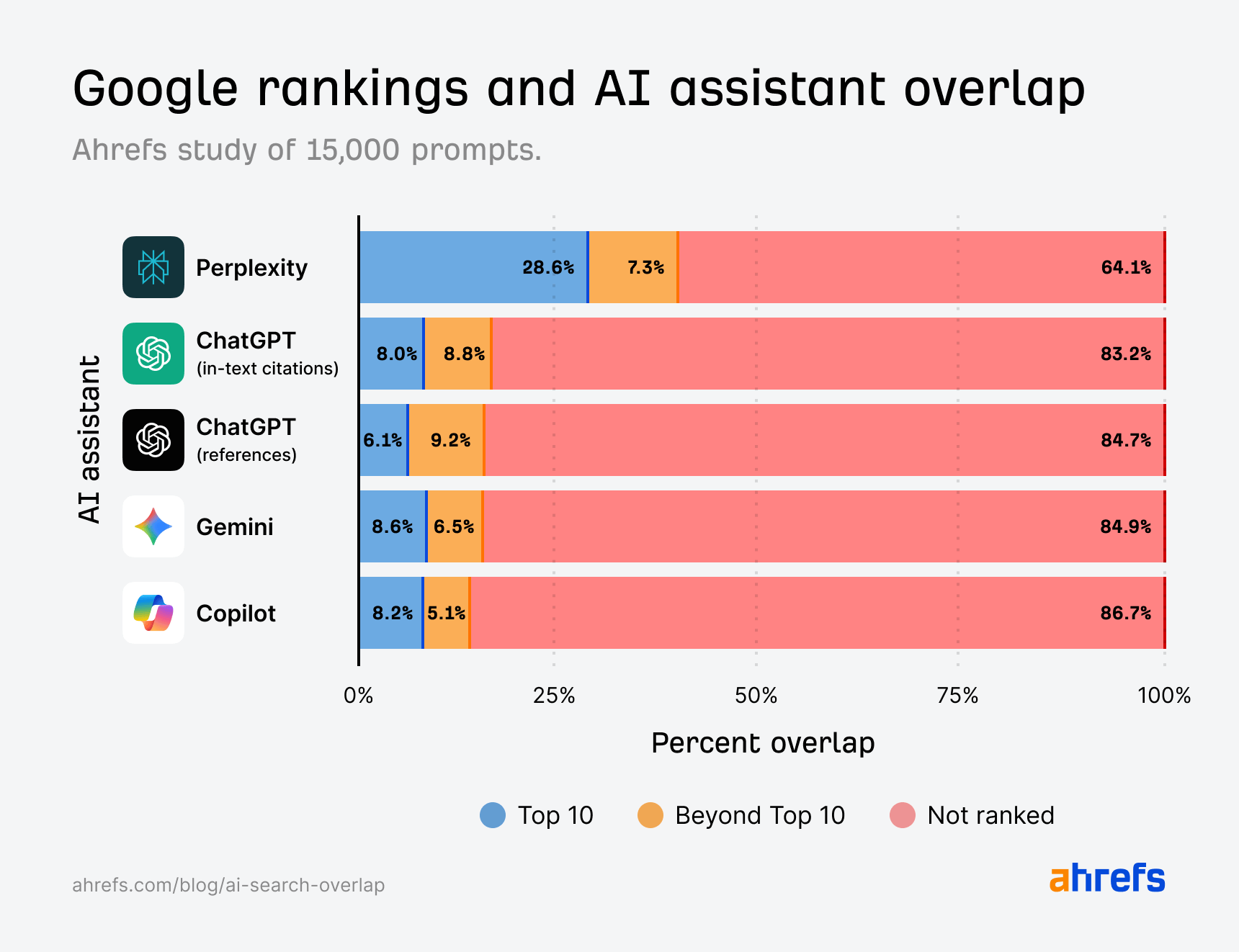
- Only 12% of URLs cited by ChatGPT, Gemini and Copilot also ranked in Google’s top 10 search results for the same prompts. (Source: Ahrefs, ((28.6 + 8 + 6.1 + 8.6 + 8.2) / 5) = 11.9%)
Research into AI search overlap carried out by Ahrefs shows that Google’s rival AI platforms don’t just pull information from the first page of Google when answering search requests. Just over one in ten URLs cited by ChatGPT, Gemini and Copilot also rank in Google’s top 10 search results for the same prompts.
- 38% of Google AI Overview citations came from pages already ranking in Google’s top 10. (Source: Ahrefs)
A separate study by Ahrefs shows a stronger – but still limited – overlap between Google’s own AI Overviews feature and its top 10 search results. A little over a third of AI Overview citations come from Google’s top 10.
- Applying GEO techniques increased content visibility within AI-generated responses by up to 40%. (Source: Princeton University)
Princeton University’s study found that optimising for search visibility metrics using established GEO techniques had a significant impact, boosting visibility in AI-generated responses by up to 40%.
The research from Ahrefs and Princeton University highlights the point that the pivot towards GEO will not replace traditional SEO, but complement it. It shows a limited overlap between AI-generated response citations and Google’s top 10 search results, even within the Google ecosystem.
The data shows that LLMs evaluate content based on different criteria from Google search results. This disparity means that visibility in AI-generated responses should be treated as a unique discipline alongside traditional SEO, each requiring its own approach to optimisation as part of modern SEO strategy.

AI referral traffic is growing rapidly
- AI chatbot referral traffic grew 357% year over year, reaching 1.1 billion referral visits in June 2025. (Source: Similarweb)
Similarweb’s research found that website traffic from AI-generated referrals grew by 357% year on year, with 1.1 billion referral visits in June 2025. What was once viewed as a trend to keep an eye on has developed into a fundamental shift in SEO behaviour.
- Traffic from generative AI sources to US retail websites increased more than tenfold between July 2024 and February 2025. (Source: Adobe)
The study by Adobe shows that the speed of growth in AI referral traffic is even higher in the US retail sector. From July 2024 to February 2025, web traffic from AI-driven referrals went up by over 1,000%
- AI-driven traffic has continued to increase, growing 393% YoY in Q1 2026 (Source: Adobe)
Another Adobe study highlights that AI-driven traffic in the US retail sector is still continuing to grow. There was a 393% year-on-year increase in AI-driven traffic for the period of January-March 2026.
The data shows that AI is now a major source of website traffic, at a scale that requires brands’ attention. AI referrals are still a fraction of those driven by Google – but the gap is closing all the time, as AI-driven traffic continues to grow. The rate of growth marks a significant change in how users find websites, and provides data that can be measured and evaluated to support optimisation.
GEO is becoming a recognised SEO discipline
- The term ‘Generative Engine Optimisation’ was introduced in a Princeton University research paper published in 2023. (Source: Princeton University)
GEO is a relatively new idea that has undergone a rapid evolution since it was first mentioned in a Princeton University research paper in November 2023. It has quickly developed from an academic theory into a mainstream search concept, implemented by brands across the world.
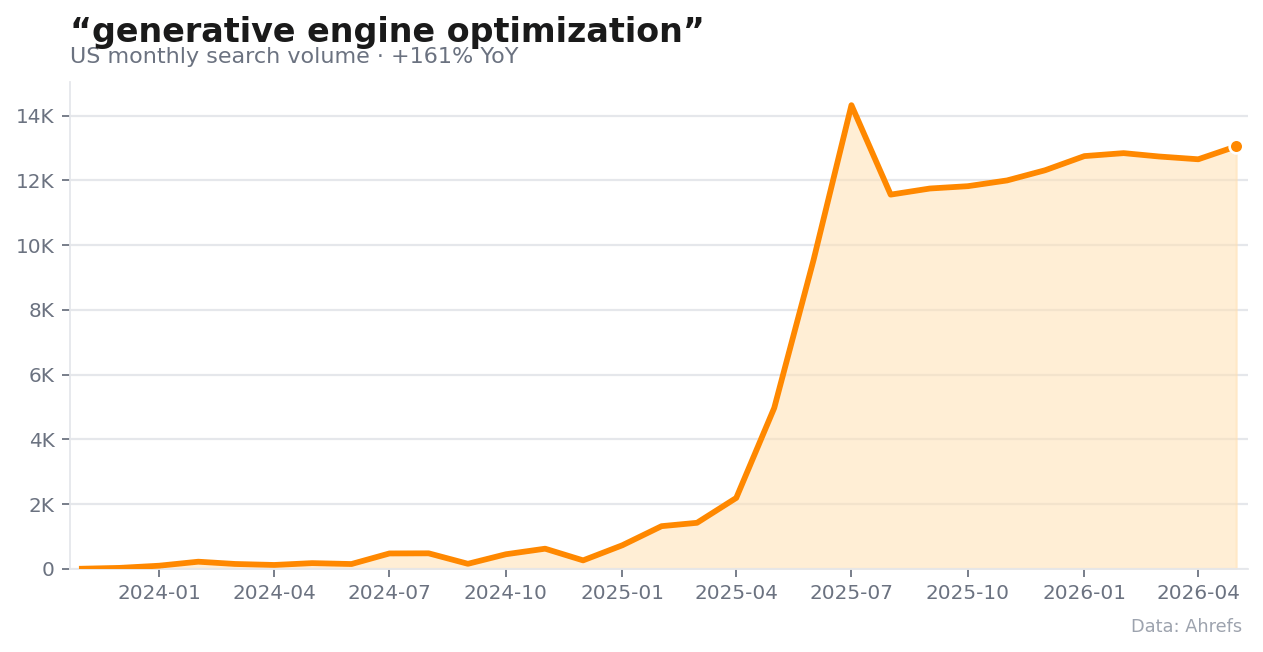
- Search demand for ‘Generative Engine Optimization’ increased by 161% YOY. (Source: Ahrefs)
Ahrefs’ research has found that awareness of GEO is growing all the time, as the concept follows SEO into the language of the mainstream. They report that search demand for ‘Generative Engine Optimization’ rose by 161% year-on-year.
- Search demand for “AI visibility” increased by 258% year over year. (Source: Ahrefs)
The research from Ahrefs showed a similar trend in search demand for ‘AI visibility’ – the term increased by 258% year on year – again emphasising the arrival of GEO as a mainstream concept.
As the studies from Princeton University and Ahrefs show, there is a significant upward trend in the usage of ‘Generative Engine Optimization’ and related terms. With AI search platforms now serving billions of users, it’s clear that AI visibility is an increasingly important channel for brands. This is borne out in the greater awareness of GEO and related ideas, as the concept takes on greater significance – particularly in the marketing industry.

Why GEO matters
We’ve established that the world of Search is undergoing a rapid shift away from traditional SEO practices and towards a broader understanding of what search visibility actually is. But why does that matter for your brand? And why is it important to integrate GEO as part of a broader SEO strategy moving forward?
It bears repeating that GEO doesn’t replace SEO – it expands SEO strategy to cover a new search channel, and often overlaps with traditional search practices. Traditional SEO still has a vital role – optimising for page ranking, crawlability and indexability helps to maximise visibility in Google searches. But it also helps AI systems to discover
and understand web content, enhancing the impact of newly-introduced GEO practices.
At the same time, GEO provides new avenues for enhancing brand visibility. With AI citations not pulling primarily from top Google search results, brands can establish themselves as trusted industry sources, even if they don’t feature prominently in Google searches.
High-quality content and unique insights (e.g. first-party research, proprietary datasets, expert opinions) are increasingly valuable commodities, and brands who can offer them are more likely to appear in AI-generated answers. This wider concept of search visibility also gives Digital PR greater value, as third-party mentions from authoritative sources are more likely to feature in AI responses.
As the understanding of GEO develops, it is likely to be integrated into SEO reporting, with metrics for AI visibility, citations and referral traffic. Agile, forward-thinking brands that are able to optimise for these metrics and become trusted sources will be well-positioned to enjoy a competitive advantage in the new era of Search.

What brands should do next
The data is unambiguous in underlining the importance of GEO, not just for the future of SEO but for the here and now. So, what can brands do to optimise for AI-generated responses? Here are a few practical steps that will make citation in AI systems more likely:
- Publish original research: Provide AI systems with information they can’t get elsewhere. Unique statistics and surveys can turn your brand from a generic voice into a valuable source.
- Publish expert-led content: Another way to increase your brand’s value to AI systems is by publishing content that features insight from a qualified expert. Again, this provides more value than generic content that repeats information that’s already available elsewhere.
- Create citation-worthy resources: High-quality, useful content will add authority to your brand. Guides, reviews, comparisons and explainers are examples of content that AI systems are more likely to reference.
- Build authority through Digital PR: Your brand might not have great visibility, but mentions from trusted third-party publications can enhance its reputation.
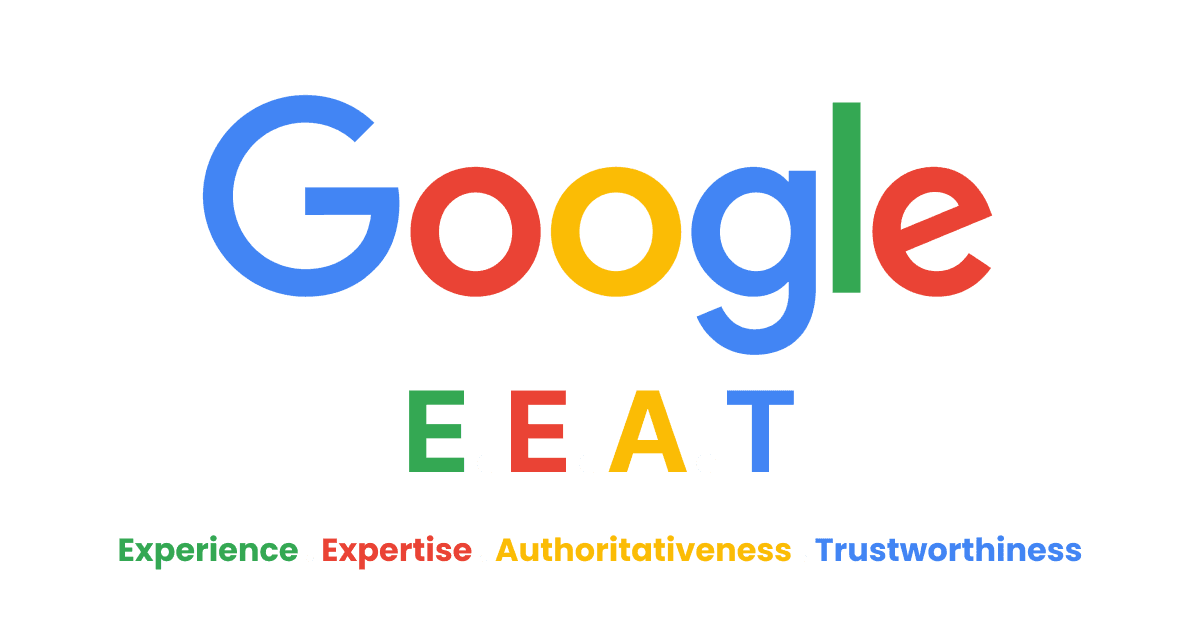
- Strengthen E-E-A-T signals: Having industry expertise and insight is only one piece of the puzzle – you need to show your credentials. Demonstrating experience, expertise, authoritativeness and trustworthiness helps AI search platforms to recognise your brand as a credible source.
- Structure content clearly for AI retrieval: Make the information you’re providing as accessible as possible. That means making it easy to find and clearly formatted, so that both users and AI can understand it.
- Track AI citations alongside traditional rankings: If you amend your SEO approach to include GEO, you’ll need to update your tracking methods too. We know that brand visibility can be boosted through AI-generated responses, so track mentions and citations.
- Measure AI referral traffic: Your updated approach to tracking should also factor in AI referral traffic. Visibility in AI-generated responses is useful, but it’s more valuable to understand whether this visibility is resulting in increased traffic.
- Optimise for AI Overviews, ChatGPT, Gemini and Perplexity, rather than Google alone: Google is the market leader in Search, but it’s not the only platform – as we’ve shown, ChatGPT alone serves almost a billion users every week. Test how your brand appears across different AI systems, monitor its success and adapt your strategy accordingly.

GEO is now a key element of SEO, and brands that adapt to include it in their SEO strategy will be better placed to boost their visibility across AI systems. The central philosophy – provide users with information that is credible, helpful and accessible – remains the same; the evolution is in what you’re optimising for, and how to measure its effectiveness.
To discuss building a personalised GEO strategy that improves your brand’s visibility across ChatGPT, Google AI Overviews, Gemini, Perplexity and the next generation of AI search, speak to Kaizen today!

 Substack
Why Good Brand Messaging Still Makes Bad Social Content
 Substack
Google expands AI Overviews, Apple Maps gets ads & more
 Substack
Interactive tools in AI Overviews, YouTube vs Netflix & more
 Substack
Reddit is a Siren song in the age of AI search
 Substack
Gemini 3.7 Flash, AI-voiced Reddit posts & more
 Free Resource
The Reddit Guide to UK Travel Audiences
 Free Resource
The Reddit Guide to UK Retail Audiences
 Free Resource
The Reddit Guide to UK Education Audiences
 Free Resource
The Reddit Guide to UK Finance Audiences
 Free Resource
Reddit Masterclass – Webinar Recording
 Free Resource
LLM Masterclass – Webinar Recording
 Free Resource
How to Build a TikTok SEO Strategy – Webinar Recording
 Free Resource
How to Build a TikTok SEO Strategy
 Free Resource
How to Measure & Optimise LLM Performance
 Free Resource
The TikTok Shop Playbook for eCommerce Brands


